
Stillness and motion
A few stray thoughts on Ari (2025)

I hold a soft spot for Léonor Serraille’s Ari in the list of films I’ve watched this year. Accompanied by a dear friend, it capped off the Berlinale, which I was very, very privileged to attend. It’s a quiet and tender piece, and I think I’ve come to find much comfort in the understated. It’s a simple premise: Ari, a twenty-seven-year-old trainee schoolteacher, finds himself out of work after a nervous breakdown. No longer receiving support from his father, in what should be his best years, he is thrust into uncertainty, on a precipice, teetering dangerously towards some end.
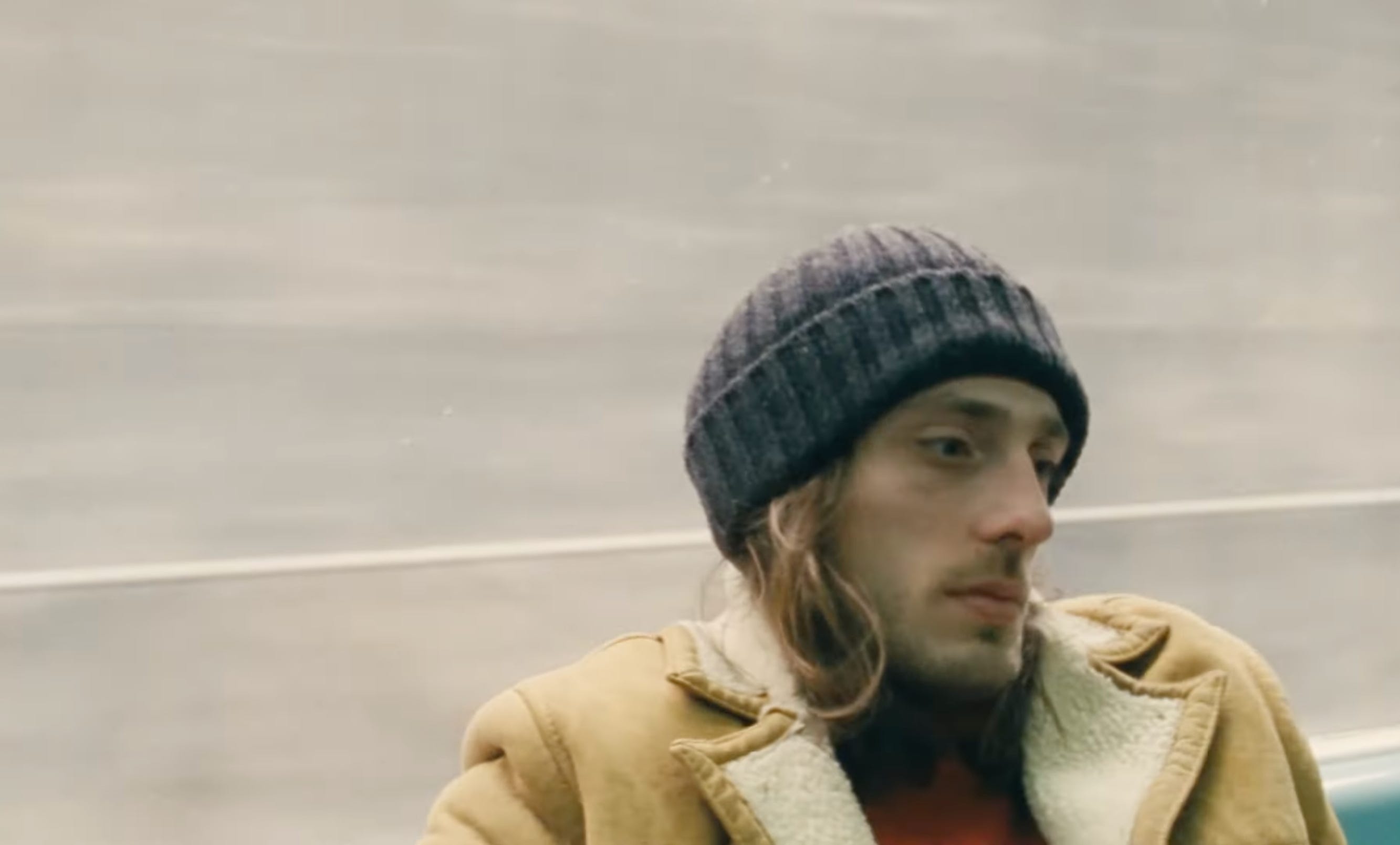
Ari is a piece that’s suffuse with a sticky stagnation. There’s a palpable malaise amid its stillness. And at a very similar stage of my own life, at end of a road, approaching a junction of innumerous divergent paths, I can’t help but take immediately to the familiar feeling. Much like Ari, there’s the sobering inkling that the trajectory of my life has already grazed its peak and begun its terminal descent, or perhaps that I’m already witnessing the throes of it. And this downward arc, all this gravity creates an enormous weight that is especially immobilising. I am sodden. It becomes a damper on life that soaks through each day. And I realise also that perhaps—and quite aptly as the year wraps up, despite convincing myself that time is merely relative—I haven’t got anything to show for my time, that all this has come to nothing. My garden is bare. My chest is undecorated. Like Ari, I’ve been sleepwalking, or worse, not even moving, but standing stock-still through life.
In the film, Ari reconnects with friends around the city, as do I in my own life, and he gets wrapped up in its velocity and its ceaseless momentum. Everyone seems to be propelled forwards weightlessly. Nothing seems to matter as long as we’re moving. As long as we go fast enough, we’re bound to end up somewhere eventually, right? Movement has become synonymous with progress, or so it seems. On the flipside, I’d recently read a well-written piece about stillness, whose writer remarked: “That all motion is a kind of evasion, a performance of purpose we use to distract ourselves from all this.” There’s some consolation here: all this speed and urgency and impetus, as we see in both the film and outside it, is just an illusion of meaning. Motion has come to obscure an unrealised destination, sometimes even replacing well-intentioned direction itself. Instinctively then, we might default to keeping still. But as the writer observes, while keeping still is fine, but it’s not as simple that stillness is oppositely the answer. It’s that both rest and motion are the same point, just viewed from different frames of reference; all this is relative. It’s not necessarily either motion or stillness that’s the be-all.
And so what then, if both movement and stillness are one and the same? As I’ve come to realise, it is that sitting can be as much active as it is passive. Even if life hurtles around you, brushes past you, there is friction either way, and that friction erodes uncertainty; the ending of which is clarity. It is a becoming. As you push through life, or as it flows through you, you lose matter, become less hazy, and gain distinction. It’s okay to be at rest. But more importantly, defining and unearthing yourself is only possible if you’re willing to be uncomfortable, as friction often is. It chafes and grazes away at you. In many ways then, Ari agrees. The film doesn’t provide some clean cut moralism: it understands that the important thing is to be both. Through Ari, we experience his burgeoning want and desire, his inertia, and the prickling guilt and hopelessness that follows. And yet, if we expect him to arrive at some tenor of total self-discovery just because of his discomfort, as our theory of friction might effect, the promise of enlightenment is tenuous, and that’s also fine. There is no ideal end-all either. We must be okay with letting go of absolute control, as stillness often entails.
So, like Michelangelo’s David, if you keep chiselling, chipping, and sanding away at yourself—as you should rightfully and deservedly see your life as your own project—you get rid of blurriness and become a more articulate, a more legible self. Erosion takes years and years; there’s plenty of time. And even if the scaffolding you’ve built up begins to crumble, that you can always start again. This I tell myself too. In full earnesty.
This year has felt like an exercise in paralysis and hand-wringing, frantic hacking away at myself, but Ari comes a soft-spoken reassurance, in despite, nudging me to keep doing, to linger, to love, to bask, to hold, to show up, to speak, and most of all, to listen, as one does while keeping still.
I’d initially started writing this piece as part of a collaborative best-movies-of-2025 recap piece for the film society, settling for Ari (I’d already started a review for Koberidze’s Dry Leaf; Haugerud’s Dreams was technically a 2024 release, but also too exposé for my liking). As I began, it stretched far too long, and became a lot more charged than I’d expected. I’ve always been a big big proponent of including the personal in criticism or in any sort of writing, but this felt a bit too close to a confession, a plea even, to put out simply in a listicle.
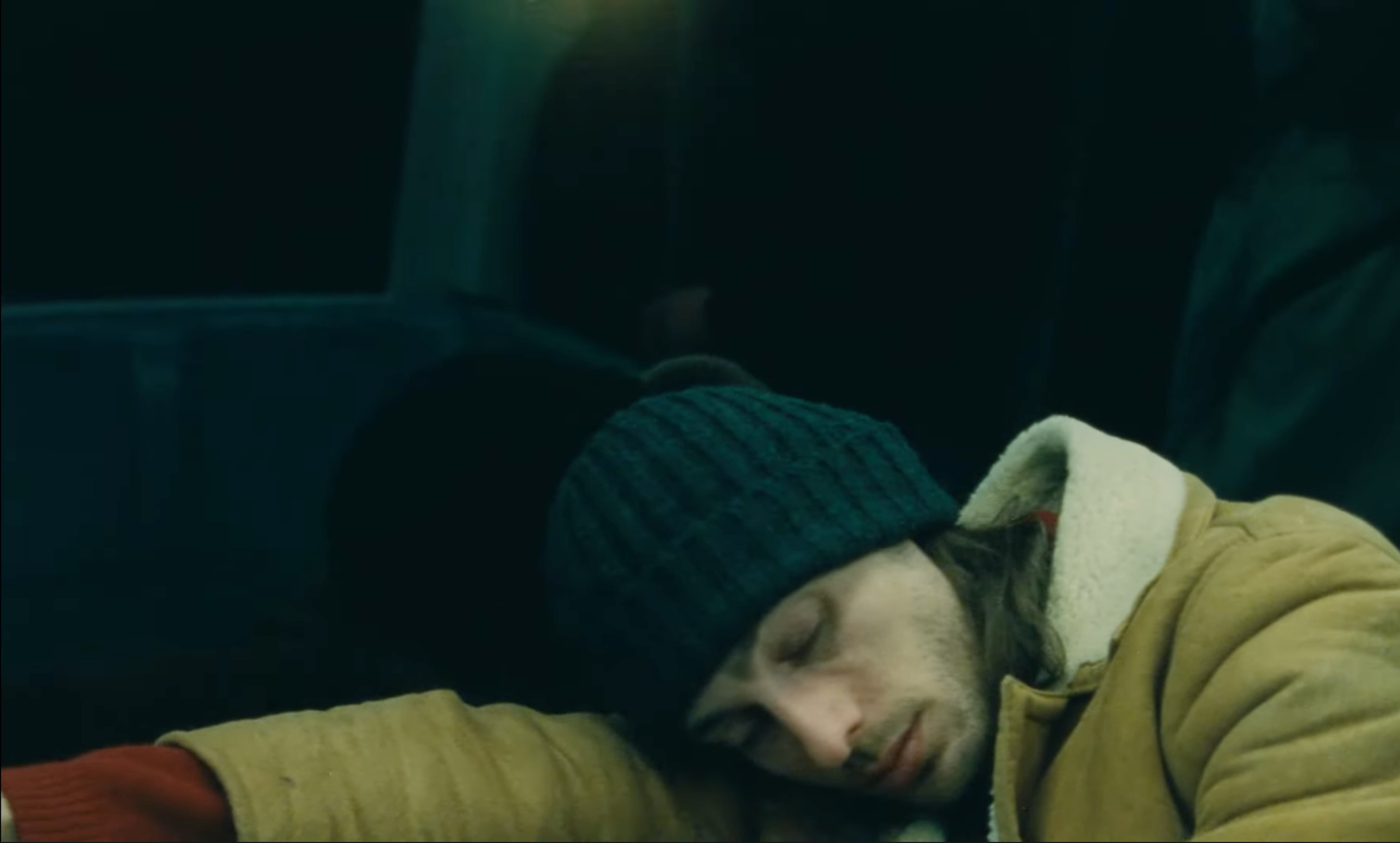
There’s a lot left I want to say, all backed up in scattered notes, but that’s for a different piece. And while I’m usually quite moderate when it comes to my own personal writing—a slow process of tempering and reshaping the piece over multiple weeks, trying to scrounge up the words to say—this one passed relatively easily. I think it was that too much of it collided with the end-of-year fugue state I always end up in, the last two weeks of December when nothing feels real, and coinciding nicely with impending transitions. I see too much of myself in Ari. Maybe that’s a good start. If you’re reading this: keep going or stay put. Anything goes. And in all senses of the word, take care of yourself.
this was a wonderful read, thank you for sharing :) i related a lot